Jaipur 2026 – Panel Discussion
Jaipur 2026 – Panel Discussion
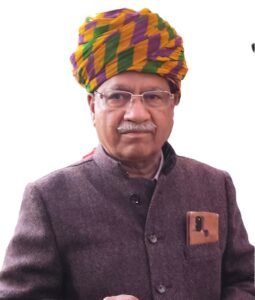
Shri Laxman Singh is the founder and secretary of Gram Vikas Navyuvak Mandal Laporiya(GVNML) a non-government registered voluntary organisation. He is well-known for initiating community led collective efforts for example, the “Chuaka System”, saving environment (Hariyalli bachao) through Eco-parks and “Khulla- Chidiyaghar” or open aviary. His initiatives and efforts for water harvesting and management, in his native village, is recognized as the famous “Laporiya Model” for ground water recharges thus strengthening rural livelihood.
Born on 8th December,1959 in Laporiya a small village of Jaipur District, Rajasthan, Laxman Singh hails from a farming background. He has dedicated over four decades of his life to water conservation efforts. In 1977, at the age of 18, his journey began when he was badelyshaken and touched by the drought conditions prevailing in Rajasthan and his village was suffering from acute scarcity of water. He started restoring the village’s old ponds through voluntary efforts when he saw his villagers forced to draw water from deep wells and witnessed others leaving the village for better opportunities in urban areas. Singh went on to construct numerous ponds in the village Shri Singh invented a unique in situ rain water conservation technology – the “Chuka System”, which is based on indigenous technical knowhow, and is applied to the village commons. The Chauka system involves creating mud ridges to slow down water flow and enable percolation into the ground. The water then accumulates in interconnected ponds, allowing overflow to move to the next one. The GVNML team has helped the rural community develop 10 thousand hectares of degraded pasturelands, as result of it milk production of this region boosted up to 3-4 times. Singh established schools in approximately 50 villages, providing free education regardless of socio-economic status. He managed these schools from 1980 to 2006, ultimately closing them when government schools were established in these area.
In 1987, shri Singh launched the “Dharti Jatan Yatra” in the form of a campaign for creating awareness for development and management of common property resources, and this Yatra has completed 38 years. More than 3000 community- based organisation are in place and engaged in programme/activities for development of “Gaucher”, “Talab” and “Naaadies” and seasonal rivers. All these efforts resulted in, the ground water aquifers have been recharged and ground water level risen by 2-3 meters. The green cover has increased 4-5 times, the numbers of birds and wildlife have increased remarkably. Till now, more than 5 lakh people have taken the pledge for protecting the local environment. In addition, some 2000 Talab were worshiped, more than 4 lakh trees were tied-up with “Raksha Sutra” and more than 10 lakhs saplings planted.
Shri Singh has received several awards, few of them are “National Youth Award” in 1992, “Indira Priyadarshini Vriksha Mitra” in 1996, “Silver Award for water warrior” in 2008, Rajiv Gandhi Prayavaran Sanrakshan Puruskar” in 2013. Further, GVNML was awarded the “Bhumi Jal Samvardhan Puruskar” by the MoWR, Government of India in 2007, and the “Best NGO” at National Level, for Rain Water Conservation by the Ministry of Jal Shakti, Government of India in 2020. In 2023, he was conferred with the Padma Shri, the fourth highest civilian honor of India, in recognition of his contributions to social work. The UNDP has appointed him as the “Eco Volunteer India” in 1996. Ashoka Innovators for the public has presented him the “Lifetime Member of the Ashoka Fellowship” in 1997. He is also on the board of Governors of some leading Civil Societies organisations of Rajasthan.
Author of a Book- “One Story at A Time”
Dr. Sudipti Arora is an internationally recognized environmental scientist, sustainability leader, and social entrepreneur working at the intersection of science, innovation, climate action, public health, and community development. She currently serves as the Director – Research & Innovation at Dr. B. Lal Institute of Biotechnology (BIBT), Jaipur, and is the Founder-Director of the Prakrit Sustainable Integrated Foundation, a Section 8 non-profit organization dedicated to sustainable rural transformation.
With over 15 years of experience in environmental biotechnology, wastewater treatment, antimicrobial resistance (AMR), circular economy, ESG, and sustainable development, she has led numerous national and international research initiatives translating scientific innovations into scalable societal impact with 100+ publications including Journals, Book Chapters.
Her pioneering work in wastewater-based epidemiology contributed to early COVID-19 surveillance in India, while her research on nature-based wastewater treatment systems has resulted in innovative solutions for decentralized sanitation and water management. She is also actively engaged in advancing Net Zero Schools, rural sustainability models, climate leadership, and ESG implementation across academia, industry, and communities.
In 2026, Dr. Arora was selected as a Chevening CRISP Fellow by the UK Government and completed her fellowship at the University of Oxford, where she worked on leadership, innovation, systems thinking, and technology-driven pathways for sustainability and net-zero transitions. The fellowship has further strengthened her vision of building future-ready leaders capable of addressing complex global challenges.
Beyond research, she has successfully mobilized multi-stakeholder collaborations involving government agencies, industries, educational institutions, international organizations, and local communities to deliver impactful sustainability initiatives across India.
Leadership & Professional Roles
Research & Impact Areas
Selected Awards & Recognitions
Speaker & Mentor
Dr. Arora is a sought-after keynote speaker, TEDx speaker, moderator, and mentor, having delivered talks on leadership, sustainability, biotechnology, innovation, entrepreneurship, women leadership, climate action, and youth empowerment across leading national and international platforms. Her work is driven by a simple belief:
“Science creates knowledge, but leadership transforms knowledge into impact.”